
Discover Galicia and the Baixo Miño: Your Gateway to an Authentic European Lifestyle
Global socio-economic trends and international mobility studies confirm a massive paradigm shift: millions of professionals and retirees are actively rejecting urban burnout, long daily commutes, and overcrowded tourist hubs. Instead, they are prioritizing what matters most—reclaiming their finite time, optimizing their accumulated capital, and securing uncompromised safety and healthcare. Galicia emerges as a premier European sanctuary for this new chapter. Offering a sophisticated yet unhurried rhythm of life, exceptional medical infrastructure, and a rare blend of regional authenticity and modern connectivity, it is a place where your hard-earned assets stretch further to buy not just a property, but a truly meaningful, secure, and peaceful existence.
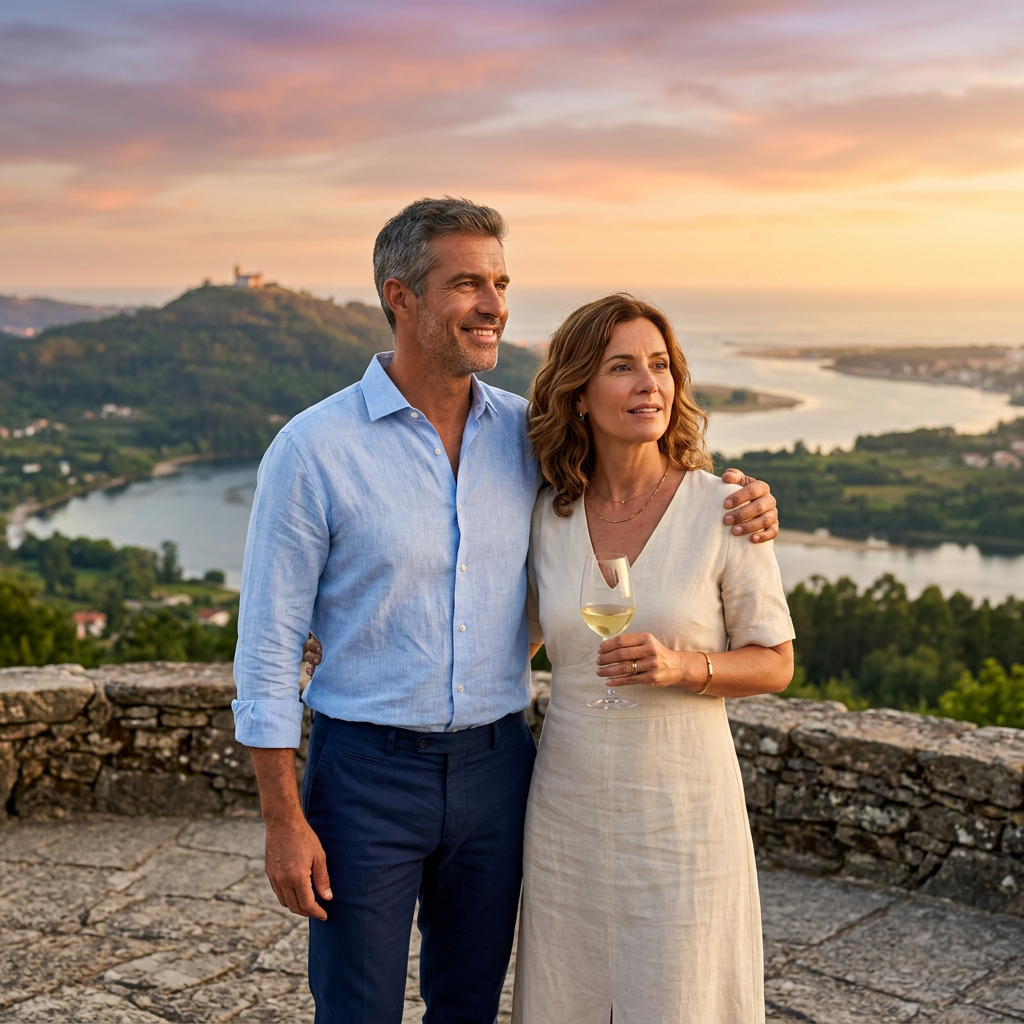
Galicia: A Strategic Atlantic Territory Designed for Living, Not Just Existing
Occupying the rugged northwest corner of the Iberian Peninsula, Galicia is home to roughly 2.7 million residents who inhabit a territory defined by a striking geographical duality. It spans over 1,500 kilometers of a breathtaking Atlantic coastline—dotted with majestic Rías, hidden coves, and pristine beaches—that seamlessly transitions into a lush, mountainous interior wrapped in ancient forests, nature parks, and endless hiking trails
Unlike the overcrowded, over-commercialized expanses of the Mediterranean coast, the Costa del Sol, or Spain’s major metropolitan capitals, Galicia remains a rare European exception. It offers an environment where natural splendor and low population density do not mean isolation. Here, urban proximity coexists with absolute tranquility, making it a sanctuary for international investors and families seeking an authentic, unhurried, and economically intelligent lifestyle.
The Camino de Santiago: A Living Historical Legacy and a Global Phenomenon
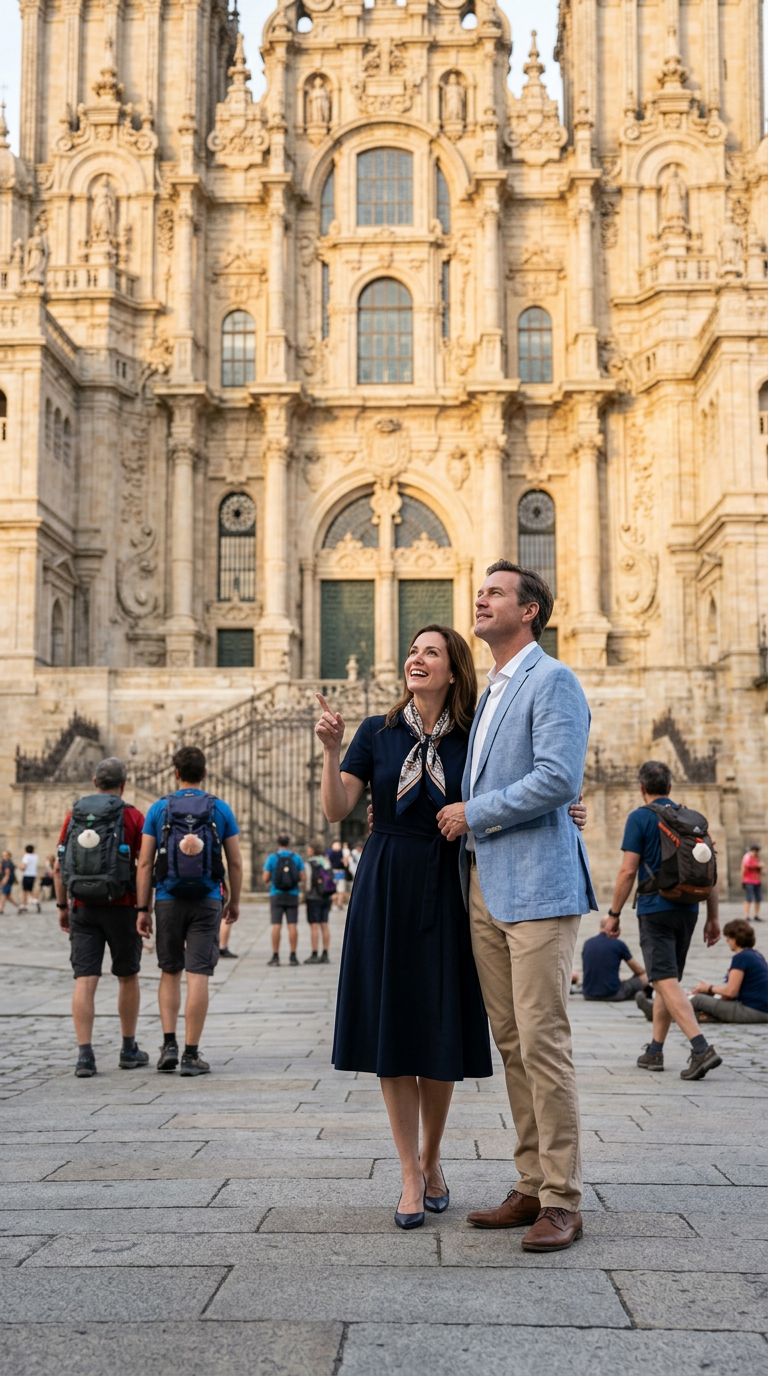
To understand the soul of Galicia is to understand the Camino de Santiago. Originating in the 9th century following the legendary discovery of the tomb of the Apostle James (Santiago), this ancient network of pilgrimage routes transformed a remote corner of the Iberian Peninsula into one of the most significant spiritual and cultural crucibles in Western civilization. For over a millennium, kings, scholars, artists, and weary travelers have walked its paths, weaving an intricate tapestry of history, architecture, and shared human resilience that defines the very character of the region.
In the modern era, the Camino has undergone a breathtaking structural renaissance. Far from remaining a relic of the past, official data from the Pilgrim’s Reception Office in Santiago de Compostela confirms that this ancient phenomenon has reached unprecedented heights, officially surpassing over 530,000 pilgrims completing the journey annually. Driven by global cultural fascination—magnified across decades by world-class literature, international media documentaries, and Hollywood cinema—the Camino has evolved into a truly global pilgrimage of self-discovery.
oday, the demographics of the trail reflect its worldwide reach. While historically European, modern statistics show participants arriving from nearly 200 countries and territories. Notably, international travelers make up the majority (nearly 60%), with a massive surge of visitors from North America (the United States ranking firmly as the top international nationality), Latin America, Asia, and Australia. Walkers discover a rich tapestry extending far beyond a physical hike: they encounter an astonishing architectural heritage, a world-renowned gastronomic culture, vibrant local traditions, and the legendary warmth of Galician communities.
Crucially, this evolution has expanded beyond the legendary Camino Francés (the historic spine of the pilgrimage) to embrace magnificent coastal alternatives. Among them, the rapidly expanding Camino Portugués (both Central and Coastal routes) and the remarkable Camino del Litoral—stretching over 1,300 kilometers along the dramatic northern and western coasts from Ribadeo down through A Guarda—have seen exponential growth. This modern diversification brings thousands of travelers directly past the doorsteps of southern Galicia, showing them that this land is not merely a place to visit, but a sanctuary to return to, invest in, and call home.
Beyond the Myth: What Does True Emptiness Mean in a Modern World?
The real question for the modern professional, family, or investor is philosophical: What does true emptiness mean? Is it living surrounded by millions of anonymous faces in a congested concrete jungle where time is swallowed by endless highway commutes and daily life is synonymous with isolation? Or is it living in a thriving, human-scale community where your neighbors know your name, where security is absolute, where high-speed rail connects you to Madrid in just over three hours, and where every day offers the luxury of time, nature, and genuine human connection? Galicia does not empty your life; it fills it with what truly matters, completely shattering the hollow myth of the so-called «empty Spain» (España vaciada).
To truly understand this vibrant reality, one must first deconstruct the tired stereotype of rural isolation. While Galicia’s rolling green hills and traditional stone hamlets are profoundly real, reducing the region to a pastoral postcard ignores a sophisticated European economy comprising four distinct provinces—A Coruña, Lugo, Ourense, and Pontevedra—representing a unique fusion of ancient maritime heritage and forward-looking economic power.
Consider A Coruña, the corporate and economic powerhouse of the north, hosting global giants like Inditex (Zara), major financial institutions, and bustling maritime ports. Moving eastward, Lugo and Ourense defy simplistic labels: Lugo blends a monumental Roman history with a powerhouse agro-industrial economy, while Ourense combines an avant-garde thermal tourism capital with a booming renewable energy sector and celebrated wine regions like Ribeiro.
The economic engine of modern Galicia is remarkably diverse and fiercely competitive on a global scale. This is a region defined by:
Advanced Automotive Manufacturing: Anchored by massive industrial production hubs like the Stellantis plant in Vigo and its extensive network of high-tech component suppliers, positioning Galicia as a primary pillar of European automotive export.
Global Seafood and Fishing Supremacy: A world leader in maritime extraction, aquaculture, and advanced food processing, supplying major international distribution networks.
Knowledge and Innovation Hubs: Santiago de Compostela serves as a prestigious academic, administrative, and scientific beacon, anchored by its centuries-old University—one of Europe’s premier intellectual centers—fostering biotechnology, R&D, and digital enterprise.
A Robust Service and Tourism Economy: A high-standard infrastructure of hospitality, banking, universal high-speed fiber optics reaching even the most rural corners, and specialized professional services.
Finally, the journey leads to Pontevedra and the Rías Baixas—the sun-drenched, dynamic southern anchor of the region. Here, economic vitality meets breathtaking Mediterranean-like coastal light. Powered by Vigo, Galicia’s industrial and maritime economic titan with its world-class port and global logistics, and flanked by the cultural and academic prestige of Santiago de Compostela just a short drive or train ride away, Pontevedra represents the ultimate synthesis of lifestyle and opportunity. Furthermore, its strategic proximity to northern Portugal creates a seamless, cross-border corridor of culture, commerce, and limitless potential, setting the stage for the crown jewel of the south: the Baixo Miño.
The Baixo Miño: Europe’s Unique Cross-Border Sanctuary
Where the Atlantic meets the final stretch of the Miño River, discover an exclusive transnational micro-region between Spain and Portugal—where historic riverside towns, pristine nature, and a vibrant dual-culture lifestyle unite to offer the ultimate European haven.
The Coastal Highway & Serra da Groba: Where the Atlantic Embraces the Mountain
From the historic maritime elegance of Baiona to the rugged Atlantic cliffs of A Guarda, explore a breathtaking coastal corridor where ancient monasteries face the ocean and mystical mountain ranges conceal wild traditions, natural waterfalls, and eternal horizons.
Although technically sitting just outside the strict borders of the Baixo Miño, the historic coastal town of Baiona serves as the magnificent gateway to this southern territory. Famous as the first port in Europe to learn of the discovery of America in 1493—when the caravel La Pinta returned to its bay—Baiona combines medieval stone ramparts, upscale marinas, and a sophisticated seaside lifestyle. From here begins one of the most spectacular coastal drives in all of Europe: the dramatic ocean-hugging route that links Baiona to A Guarda
Winding along this coastal highway, the road brings you directly to Oia, home to a architectural marvel found nowhere else in Europe: an ancient Cistercian monastery built literally at the crashing edge of the Atlantic waves. With a turbulent, fascinating history of pirate attacks, monks, and maritime resilience, the Monastery of Oia stands as a silent sentinel of stone, lashed by sea spray and eternal tides.
Rising sharply behind the coast is the majestic Serra da Groba, a sweeping mountain barrier dotted with ancient petroglyphs, enchanted forests, and pristine natural pools (pozas) and cascading waterfalls that offer refreshing summer swims and world-class hiking trails. Deep within these mountains lies a living piece of ancient Iberian culture: the Rapa das Bestas. This legendary, centuries-old tradition brings local communities together to safely gather wild horses descending from the mountains, celebrating a deep, respectful bond between man, beast, and ancestral mountain ecology.
A Guarda and Monte Santa Tecla: Where the River Meets the Atlantic
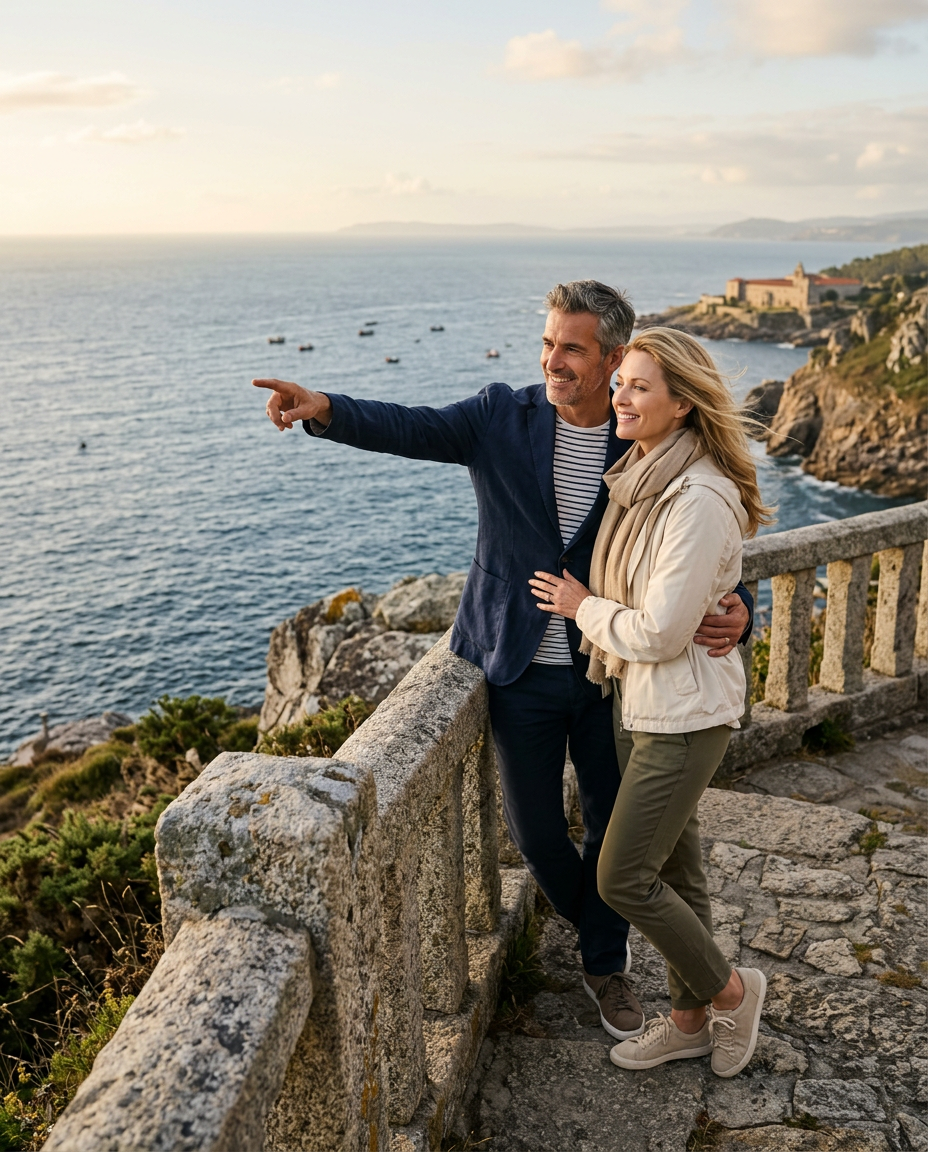
At the absolute southwestern tip of Galicia lies A Guarda, a vibrant and charming seafaring town that captures the very essence of coastal living. Here, the majestic Miño River—after carving its way through over 300 kilometers of valley and canyon—finishes its journey, emptying its waters into the vast expanse of the Atlantic Ocean in a breathtaking natural estuary that forms the border with Portugal.
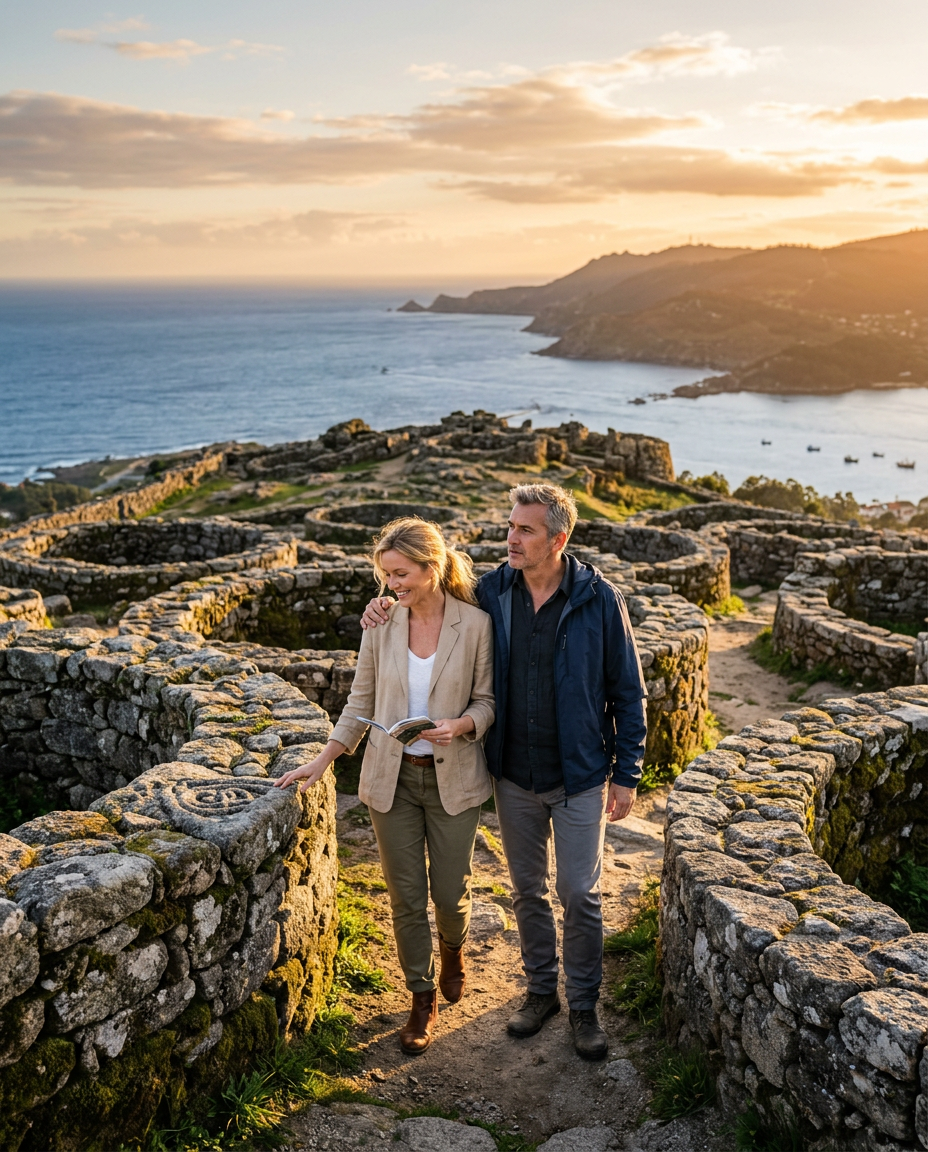
Standing guard 300 meters directly above the town and the ocean is the legendary Monte Santa Tecla (Monte Santa Trega). More than just a panoramic viewpoint offering some of the most staggering 360-degree coastal vistas in Europe, it is an extraordinary archaeological treasure. At its summit lies one of the best-preserved pre-Roman Celtic castros (hillforts) in the Iberian Peninsula, alongside profound historical echoes of Roman presence. Walking among these ancient stone dwellings reveals a deep heritage of an ancient civilization that chose this exact strategic paradise to build its home.
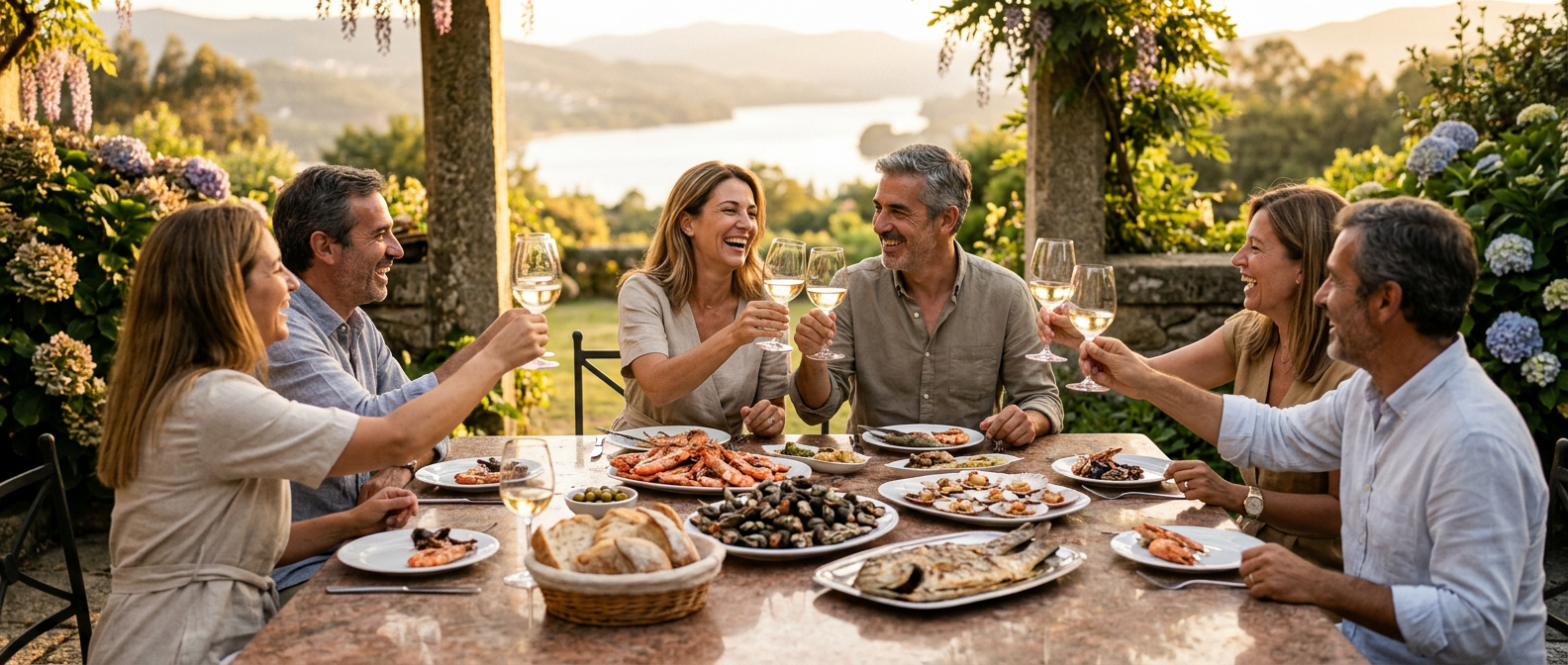
Today, A Guarda is equally celebrated for its world-class gastronomy. Because of its unique maritime location, the town offers an abundance of exceptionally fresh fish and seafood—including legendary local delicacies like fresh coastal barnacles, lobsters, and wild catch—at prices that remain remarkably accessible compared to major European or North American urban centers. Here, exquisite dining is a daily, unpretentious luxury.
O Rosal and Tomiño: The Fertile Valley and Wine Heritage of Baixo Miño
Moving slightly inland along the riverbanks, O Rosal and Tomiño reveal the rich, fertile agricultural heartland of the Baixo Miño. Known affectionately as the «natural garden» or orchard of the region, this micro-climate valley benefits from exceptional sunshine hours and rich soils that yield an abundance of fresh fruits, organic vegetables, and legumes across every changing season—all cultivated through traditional, sustainable methods that preserve pure natural flavors and nutrients.
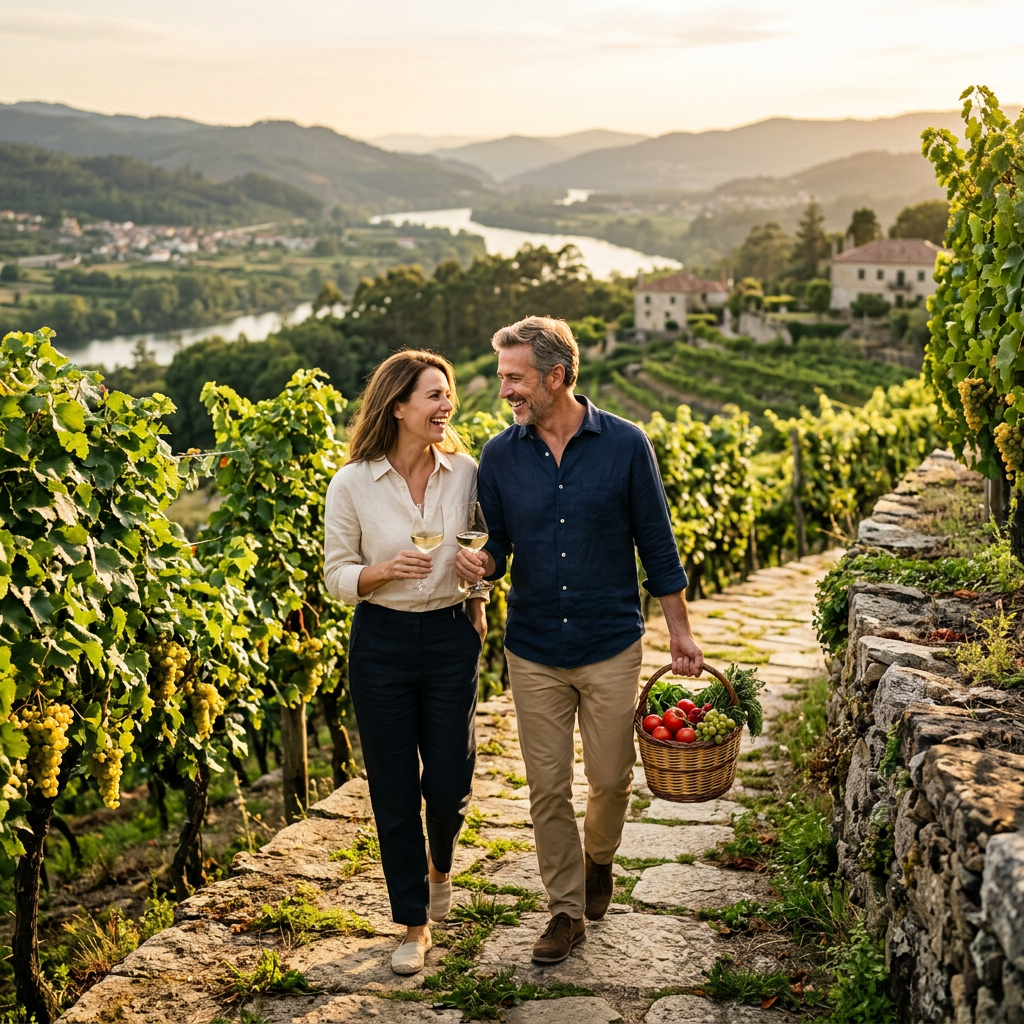
This same privileged terroir creates one of Europe’s most celebrated wine cultures: the world-renowned Denomination of Origin (D.O.) Rías Baixas, specifically the exquisite local Albariño and regional blends. Here, terraced vineyards clinging to sun-drenched valley slopes produce crisp, aromatic white wines that grace the finest tables globally. Owning property here means living steps away from historic family-run wineries where wine-making is treated as an ancient art form, allowing residents to enjoy world-class vintages right at the source as part of their daily life.
Tui, Salvaterra, and Arbo: Medieval Stones and Ancestral River Traditions
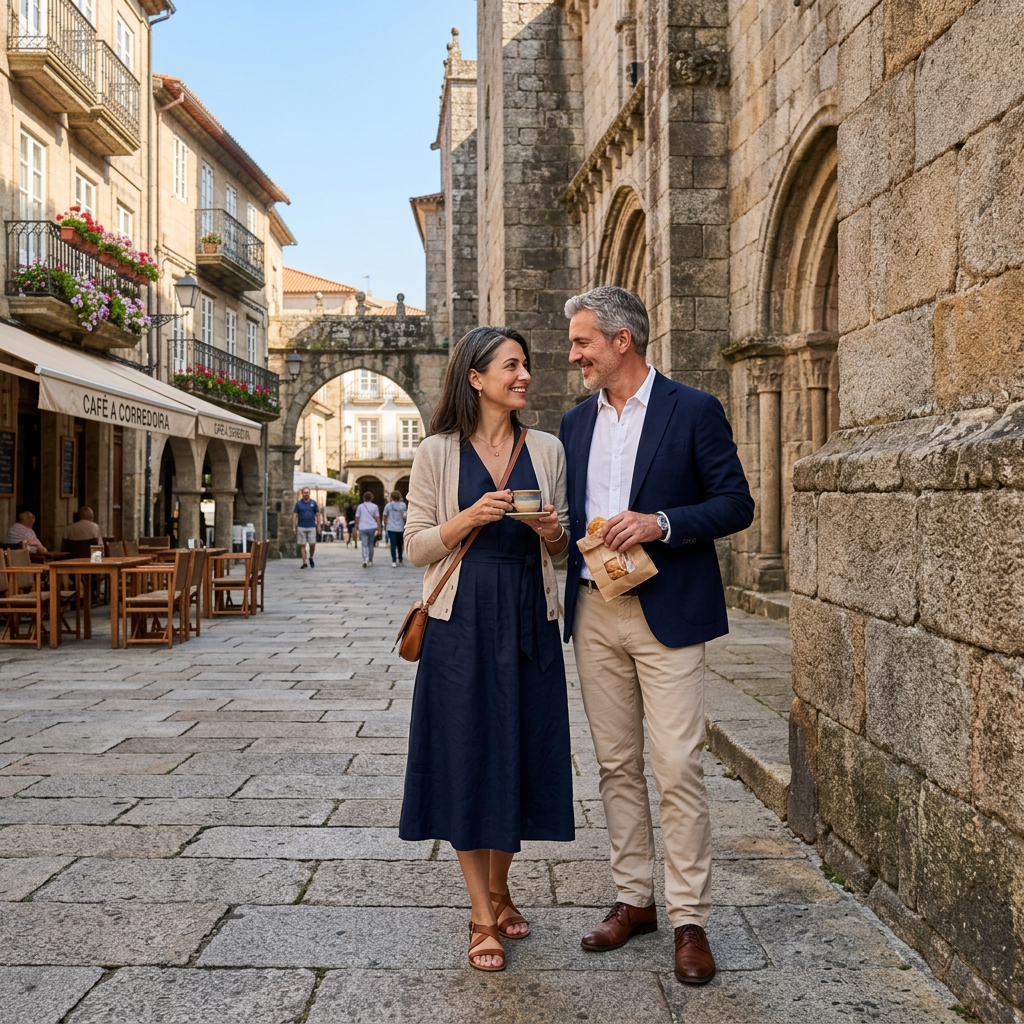
Continuing along the banks of the Miño River, the monumental historic town of Tui rises majestuously above the water. Once one of the seven provincial capitals of the ancient Kingdom of Galicia, Tui is a labyrinth of steep cobblestone medieval streets, gothic palaces, and hidden plazas that whisper tales of bygone centuries. Dominating the skyline is its awe-inspiring Cathedral-Fortress (Catedral de Santa María), a monumental blend of Romanesque and Gothic architecture built to command the river frontier. Today, Tui offers a vibrant, sophisticated social scene filled with charming cafes, artisanal shops, and lively plazas where history meets modern comfort.
Following the course of the river further upstream, you discover Salvaterra do Minho and Arbo, where the landscape opens into breathtaking river gorges and deep-rooted traditions. Arbo holds a legendary culinary status across Europe as the undisputed capital of the lamprey (lampreia). This prehistoric, eel-like creature has been fished in the swirling rapids of the Miño using stone-built medieval fishing structures (pesqueiras) since Roman times. Today, preparing and tasting lamprey is celebrated as a high art form of ancestral gastronomy, attracting food connoisseurs from around the globe to specialized local festivals and historic cellar-restaurants.
A Raia and Northern Portugal: Two Nations United by the River, Plus Exceptional Real Estate Opportunities
One of the most enchanting realities of living in the Baixo Miño is that the river does not divide—it unites. Known locally as A Raia, this borderlands region represents centuries of seamless cultural brotherhood where the traditions of Galicia and Northern Portugal interweave daily. Within a tight 50-kilometer radius, you can explore the majestic spa towns of Melgaço and Monção, wander through the awe-inspiring star-shaped walled fortress of Valença do Minho, enjoy arts and riverside sculpture parks in Vila Nova de Cerveira, or reach the Atlantic surf haven of Vila Praia de Âncora and historic Caminha. Furthermore, world-class destinations like Viana do Castelo, historical Ponte de Lima, and Portugal’s vibrant cultural and economic powerhouse—Oporto (along with Vila Nova de Gaia)—are less than an hour and a half away, bringing international airports, exquisite wine cellars, world-famous Portuguese cod gastronomy, and urban sophistication right to your doorstep.
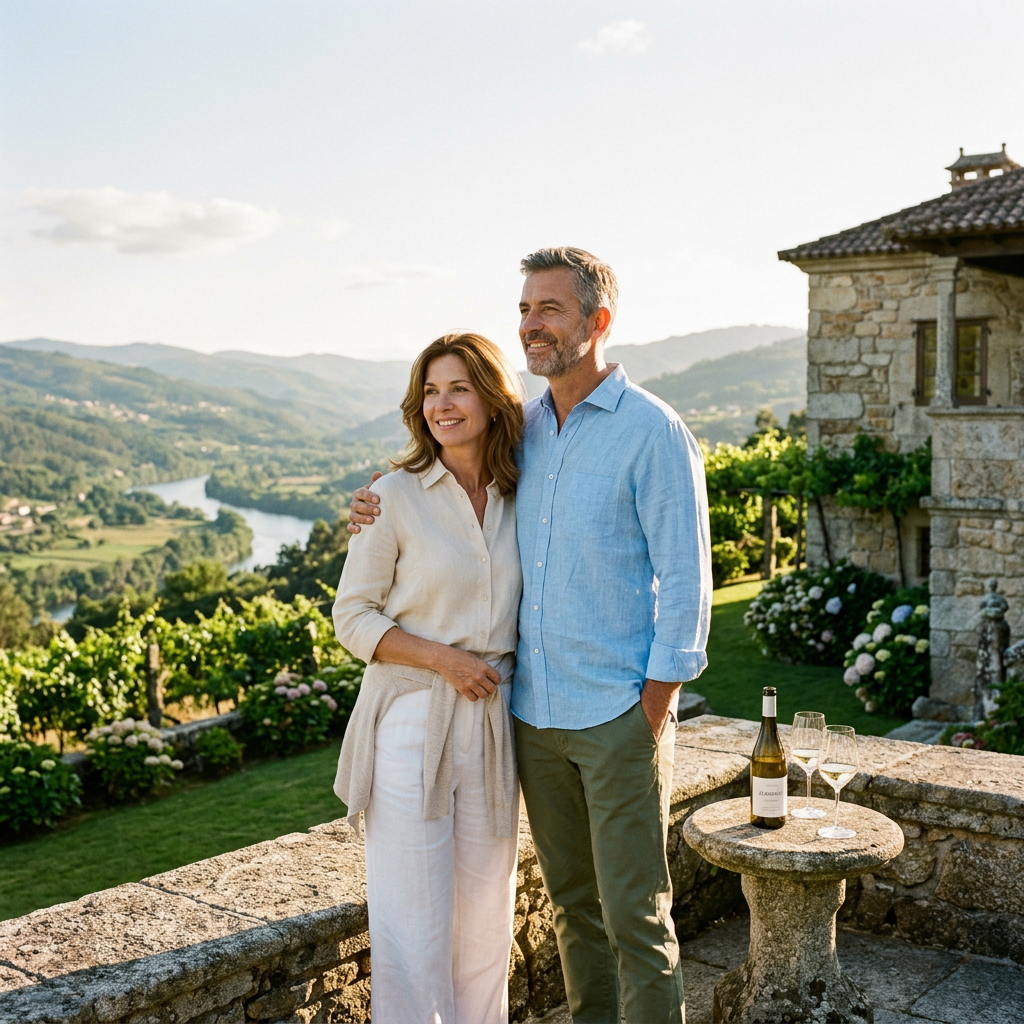
Beyond this peerless lifestyle, the region holds an extraordinary, pragmatic advantage: exceptional real estate value. In a global market where acquiring a high-end home in major North American, Canadian, or northern European cities has become nearly unattainable, the Baixo Miño and its surroundings offer a rare window of opportunity. Whether you desire a historic stone manor house (pazo) with private land to cultivate organic gardens or keep horses, a peaceful country estate, or a spacious modern apartment overlooking the water, property values here remain remarkably accessible. You are not just buying square meters; you are acquiring absolute security, unmatched natural and cultural diversity, and a life of uncompromised quality at a fraction of the cost.
Your New Life in Galicia Awaits: Let’s Begin the Journey
Embrace the Authenticity, Security, and Luxury You Deserve
Don’t just dream of an unhurried, meaningful European existence—make it your reality. Whether you are ready to invest in a historic property, explore relocation options, or simply want to learn more about the seamless process of moving to the Baixo Miño, our team is here to guide you every step of the way. Discover the unparalleled lifestyle that has become the secret of the Atlantic coast.